
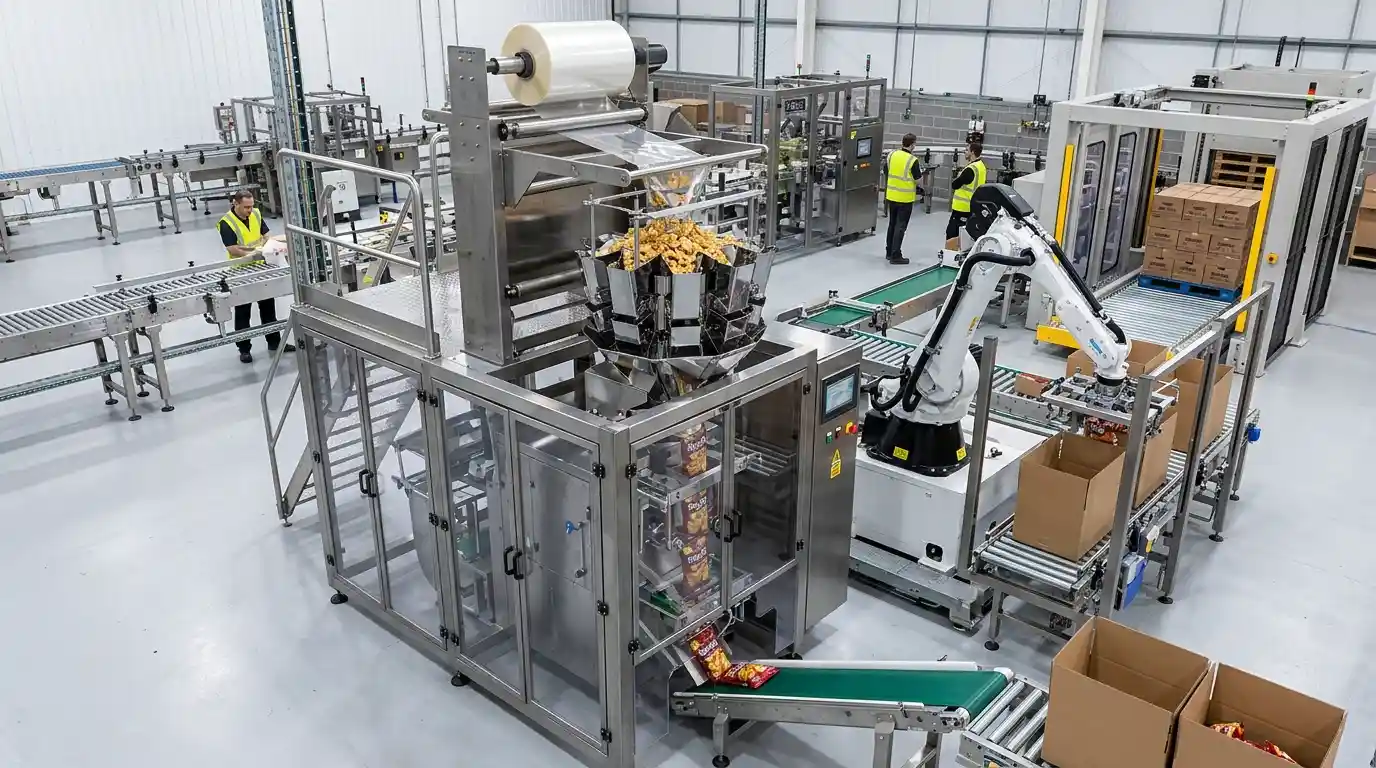
Investing in the right packaging machine and filling equipment is a critical decision that directly impacts your production efficiency, product quality, and long-term operational costs. Modern production lines require scalable, precise, and robust automated packaging solutions to maintain competitiveness in today’s fast-paced market. Whether you are expanding an existing facility or establishing a new packaging system, understanding the key technical parameters is essential before finalizing your investment. Harkom Packaging provides high-performance packaging solutions engineered to optimize speed, accuracy, and versatility across diverse industrial applications.
Selecting an optimal packaging machine requires a comprehensive analysis of your physical product characteristics, target production volumes, and operational environment. Product density, viscosity, granularity, and moisture levels determine the precise feeding mechanisms needed to prevent clogging, product degradation, or weight variance. High-capacity operations demand robust packaging machines capable of continuous operation with minimal downtime and maintenance interventions. Harkom Packaging designs custom-tailored systems that align with your specific product behavior, ensuring consistent output and seamless integration into existing workflows.
The physical state of your material—whether powder, liquid, granule, or paste—dictates the core engineering design of the required filling machine. Liquids require volumetric, gravity, or piston-driven systems, while free-flowing powders demand advanced dosing technology to maintain strict volumetric precision. Harkom Packaging manufactures specialized filling machine models designed to handle diverse material types while maintaining ultra-low error margins and protecting product integrity throughout the entire batch lifecycle.
Dosing accuracy in modern packaging machines directly governs raw material waste and regulatory compliance. Minor deviations in fill weight per package can lead to severe material losses over large production runs or result in costly non-compliance penalties. Harkom Packaging incorporates advanced load-cell technology, high-resolution encoders, and intelligent PLC control systems across its entire packaging machines lineup, delivering exceptionally precise portion control that protects your bottom line.
An auger filling machine is the industry standard for precise, dust-free dosing of non-free-flowing and fine powder materials such as spices, pharmaceuticals, chemical powders, and nutritional supplements. The rotating screw mechanism within an auger filling machine ensures controlled volumetric delivery, preventing product compacting and eliminating air pockets during the feed process. Harkom Packaging engineers custom auger filling machine options equipped with servo-driven motors and sealed hoppers, providing maximum accuracy and a clean production environment.
Determining the required speed involves balancing your current daily output targets with projected future capacity growth. Calculating speed requires evaluating bags per minute (BPM) or fills per minute alongside setup time, film changes, and cleaning protocols.
Harkom Packaging builds flexible systems with adjustable speed controls, allowing facilities to scale operations seamlessly as demand grows.
Operational versatility depends on how quickly a packaging machine can transition between different product types, fill volumes, or pouch formats. Modern manufacturing demands minimal tool-less changeover routines to reduce expensive downtime between batch runs. Harkom Packaging designs user-friendly equipment featuring quick-release mechanical components, accessible hygiene zones, and intuitive operator interfaces that streamline maintenance and cleaning procedures.
Your chosen filling machine and sealing unit must be fully compatible with your selected packaging materials, whether dealing with flexible barrier films, rigid containers, glass jars, or pre-made pouches. Heat-sealing temperatures, tension control, and forming collar design must match the thermal and mechanical properties of materials like PE, PP, aluminum foil, or biodegradable films. Harkom Packaging offers comprehensive material compatibility testing to ensure flawless seals, structural bag integrity, and long shelf-life protection.
Advanced automation transforms a standalone filling machine into a fully connected, data-driven production asset. Integrated Programmable Logic Controllers (PLCs) with multi-language HMI touchscreens allow operators to store custom recipes, track real-time operational diagnostics, and instantly adjust fill parameters. Harkom Packaging equips its systems with industry-standard control platforms, remote diagnostic support, and smart sensor arrays that prevent fault conditions before they cause system stoppages.
Industries such as food processing, pharmaceuticals, and chemicals are subject to strict regulatory frameworks regarding hygiene, safety, and traceability. Packaging machinery must feature food-grade contact surfaces, typically stainless steel AISI 304 or 316, alongside washdown-capable electrical enclosures and emergency stop protocols. Harkom Packaging manufactures all equipment in strict accordance with international quality standards, ensuring full compliance with CE guidelines, sanitary design rules, and operational safety standards.
Partnering with an experienced manufacturer ensures your production line achieves maximum speed, pinpoint accuracy, and uninterrupted reliability. Harkom Packaging combines engineering expertise with cutting-edge technology to supply robust packaging solutions, high-precision packaging machines, and specialized auger filling machine systems tailored to your exact manufacturing needs. Contact Harkom Packaging today to consult with our technical specialists and discover the ideal filling and packaging setup for your business.

Our Company which founded in 2011 with its experiences in machine production and automation sectors is enhancing with safe steps in the way to be one of the leader engineering company.